

Ford AWD Vehicle Guide

All Wheels, All Right
When you’re behind the wheel, confidence is everything. At Aschenbach Ford, we know how essential it is to have a vehicle you can rely on no matter what the road or weather throws at you. Whether you’re commuting to work, taking a family road trip, or heading off the beaten path, Ford’s AWD vehicles offer exceptional control, stability, and performance. This guide will explore how Ford AWD systems work and highlight what makes each vehicle special, from the innovative Ford Maverick to heavy-duty Ford Super Duty trucks. No matter your lifestyle, there’s a Ford AWD car for you. Visit us today in Wytheville, VA!

Ford Bronco AWD System Explained
For off-road enthusiasts, the Ford Bronco offers an unmatched driving experience. Available with advanced AWD and 4WD options, the Ford Bronco is built to conquer any trail. Its Terrain Management System™ features G.O.A.T. Modes™, allowing drivers to adjust to Mud/Ruts, Sand, and Rock Crawl settings. With features like Trail Control™ and available locking differentials, the Ford Bronco is engineered for serious off-road adventures. Whether camping in the mountains or exploring desert landscapes, this Ford AWD vehicle ensures you’re ready for the journey ahead.
Ford Edge AWD System Explained
The Ford Edge is where performance meets sophistication, with an Intelligent AWD system constantly monitoring road conditions to deliver the right amount of torque to each wheel. For those who want extra peace of mind during bad weather or cornering at high speeds, this Ford AWD vehicle offers a smooth and controlled driving experience. With its powerful engine options and tech-forward features like Ford Co-Pilot360™, the Ford Edge’s AWD system complements its dynamic performance, making it a great pick for families and professionals alike.
Ford Escape AWD System Explained
The Ford Escape combines practicality, versatility, and advanced AWD technology. Its available Intelligent AWD system excels at adjusting to changing road conditions, providing added stability and traction when needed. With multiple powertrain options, including hybrid and plug-in hybrid variants, the Ford Escape brings eco-conscious driving to the AWD space. It’s equally at home on a slick city street or muddy country trail, offering smooth handling and a spacious interior. The Ford Escape is a compact SUV built for modern life, the perfect Ford AWD vehicle for commuters and families alike.
Ford Explorer AWD System Explained
The Ford Explorer is designed for those who crave adventure, and its AWD system plays a big role in making that possible. The Ford Explorer comes equipped with an available intelligent 4WD and a standard Terrain Management System™ that adapts to the environment with the turn of a dial. From snowy highways to sandy beaches, the Ford Explorer’s AWD system provides confidence and capability with drive modes like Slippery, Trail, and even Sport for dynamic on-road performance. With room for up to seven passengers and exceptional towing capabilities, this Ford AWD vehicle is the perfect companion for family trips and outdoor exploration.
Ford Maverick AWD System Explained
For drivers looking to blend efficiency with capability, the Ford Maverick offers an AWD system perfectly suited for adventure. The compact Ford Maverick has an Intelligent AWD option that ensures seamless traction without compromising fuel economy. Among Ford’s AWD vehicles, the Ford Maverick stands out for its balance of efficiency and capability. This system automatically adjusts torque between the front and rear wheels, giving you the confidence to tackle slippery roads, dirt paths, or even light off-roading. Compact and affordable, the Ford Maverick is the ultimate city-to-country truck. With the available off-road packages, this Ford AWD vehicle is ready for more rugged terrain wherever you are.
Ford F-150 AWD System Explained
The Ford F-150 is both a workhorse and a technological powerhouse. Equipped with available AWD and 4WD systems, the Ford F-150 is as versatile as it is capable. Its Electronic Shift-On-The-Fly system lets you quickly switch between drive modes for optimal performance in any situation, whether towing, hauling, or navigating rough terrain. The advanced features, like the PowerBoost® full-hybrid engine and Pro Power Onboard, let the Ford F-150 pair rugged performance with cutting-edge innovation, making it the go-to AWD Ford vehicle for drivers who demand it all.
Ford Super Duty AWD System Explained
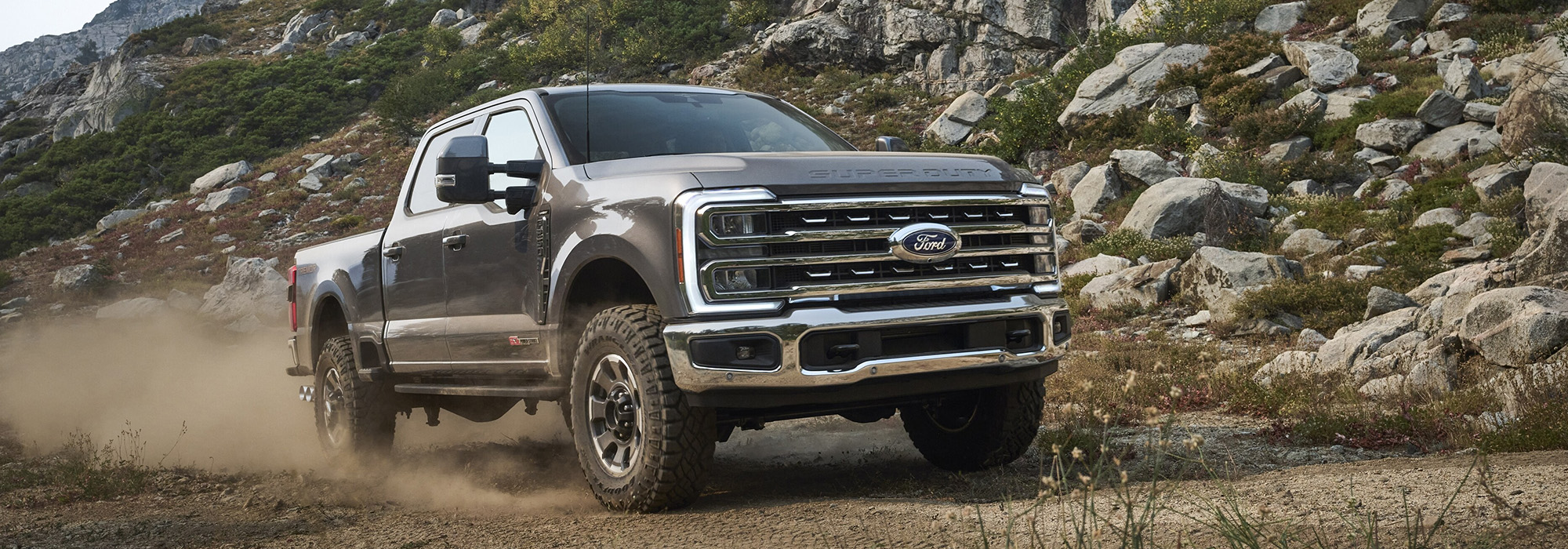
When you need serious power, the Ford Super Duty delivers. Built for heavy-duty jobs, the Ford Super Duty lineup of the Ford F-250, F-350, and F-450 features advanced AWD and 4WD systems designed to handle the toughest conditions. With features like locking rear differentials and Electronic-Shift-On-The-Fly capability, the Ford Super Duty ensures you’re ready for anything, from muddy work sites to snowy highways. Its class-leading towing and payload capabilities, combined with durable Ford AWD vehicle performance, make the Ford Super Duty a trusted partner for contractors, farmers, and anyone who needs to get the job done.
Find Your Ford Today
At Aschenbach Ford, we’re proud to offer a full, diverse lineup of Ford AWD vehicles designed to meet your needs. Whether you’re looking for a compact SUV for city driving or a heavy-duty truck for work, our team is here to help you find the perfect match. Stop by our dealership to test-drive models like the Ford Maverick, Ford Edge, Ford Escape, and more from Ford’s incredible AWD lineup. Let us show you why Ford’s AWD systems are among the best in the industry, delivering safety, performance, and reliability on every drive. No matter where life takes you, a Ford AWD vehicle from Aschenbach Ford will get you there with confidence. Visit us today in Wytheville, VA!
Ford Snowplow Prep Package
Winter Is Coming – Are You Ready?
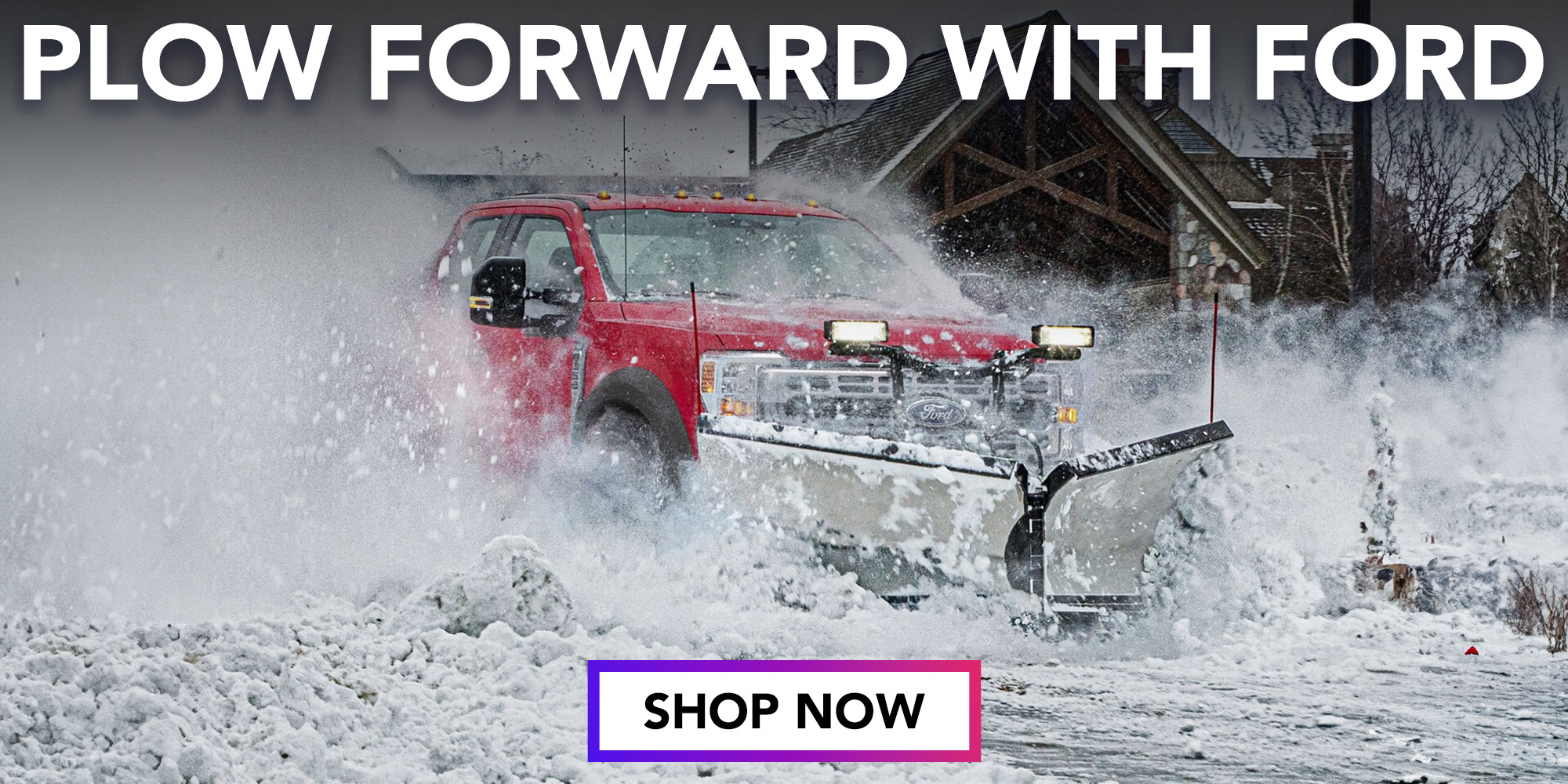
As winter approaches, those living in snowy regions need to prepare their vehicles for the harsh conditions ahead. Whether you’re a business owner relying on heavy-duty equipment for snow removal or a homeowner clearing driveways, having a reliable snowplow setup can make all the difference. Here at Aschenbach Ford, we understand that not every truck is created equal when it comes to handling the extra weight of a snowplow. Ford’s Snowplow Prep Package is an invaluable addition to select Ford Super Duty trucks, ensuring you’re equipped to tackle the toughest snow-covered paths. Visit us today in Wytheville, VA!

What Is The Ford Snowplow Prep Package?
The Ford Snowplow Prep Package is a specialized factory-installed option available on Ford Super Duty models, designed for heavy-duty performance in snowy conditions. This package includes essential upgrades, such as a high-output alternator for sustained power, upgraded heavy-duty front springs for enhanced support, and additional wiring provisions tailored for snowplow installation, all of which make it easier to add a snowplow attachment to your Ford truck. These modifications make it possible for owners to mount a snowplow without compromising the performance of their vehicle. With the Ford Snowplow Package, drivers can be confident in their truck’s capability to handle winter’s toughest conditions and challenges.
The Ford F-250 is one of the top choices for heavy-duty snowplowing, thanks to its robust design and capability, as well as its affordability compared to the Ford F-350 and Ford F-450. The Ford F-250 Snowplow Prep Package includes a 190-amp or 250-amp alternator and heavy-duty front springs, providing the necessary support to handle the additional weight of a snowplow. With these upgrades, the Ford F-250 becomes a reliable vehicle for snowplowing, ideal for those needing a truck ready to handle serious winter tasks.
Ford F-150 Snowplow Prep Package
While the Ford F-150 does not have a factory-standard snowplow package, there are various aftermarket prep packages available. These prep packages allow owners to equip their trucks for plowing, offering modifications designed to enhance the capability and longevity of the vehicle. While these upgrades might not provide the same integrated benefits as the factory-installed package on the Ford Super Duty, there are plenty of robust aftermarket kits available.
Ford Ranger Snowplow Prep Package
The Ford Ranger is another popular choice among truck enthusiasts, but it doesn’t come with a factory-installed Ford Snowplow Prep Package. Nevertheless, aftermarket snowplow prep packages are available for those looking to prepare their Ford Ranger for winter tasks.
Ford Maverick Snowplow Prep Package
As a compact truck, the Ford Maverick is an unconventional choice for snowplowing, but can still handle lighter plowing needs with the right aftermarket modifications. While the Ford Maverick does not come with a factory-installed Ford Snowplow Prep Package, it may be customized for winter with available aftermarket kits.
Benefits of Snowplow Prep
Snowplow prep offers a number of benefits for truck owners who plan to use their vehicles for snowplowing. Some of the key benefits include:
- Increased safety: A snowplow prep package can help to reduce the risk of accidents and injuries by providing additional support and stability to the truck.
- Improved performance: A snowplow prep package can help to improve the performance of your truck by providing additional power and support to handle the weight of a snowplow.
- Reduced maintenance: A snowplow prep package can help to reduce maintenance costs by providing additional support and protection to the truck’s engine and transmission.
- Increased warranty protection: A snowplow prep package can help to protect your warranty by ensuring that your truck is properly equipped to handle the demands of snowplowing.
By investing in a snowplow prep package, you can enjoy these benefits and more, and ensure that your truck is properly equipped to handle the demands of snowplowing.
Additional Considerations
While the Ford Snowplow Prep Package is a reliable and comprehensive solution for plowing, it’s essential to consider weight distribution, electrical load, and safety measures. Snowplow prep packages are designed to handle the added weight and stress of snowplows, enhancing the strength of the truck’s front end and ensuring compatibility with various truck models. Adding a plow increases front-end weight, which could affect the handling, especially for models without factory-installed packages. Plows often draw significant power, so upgrading the alternator or battery may be recommended. Always ensure that your truck’s brake and lighting systems are up to standard to handle winter driving conditions safely.
Plow Your Way To Freedom
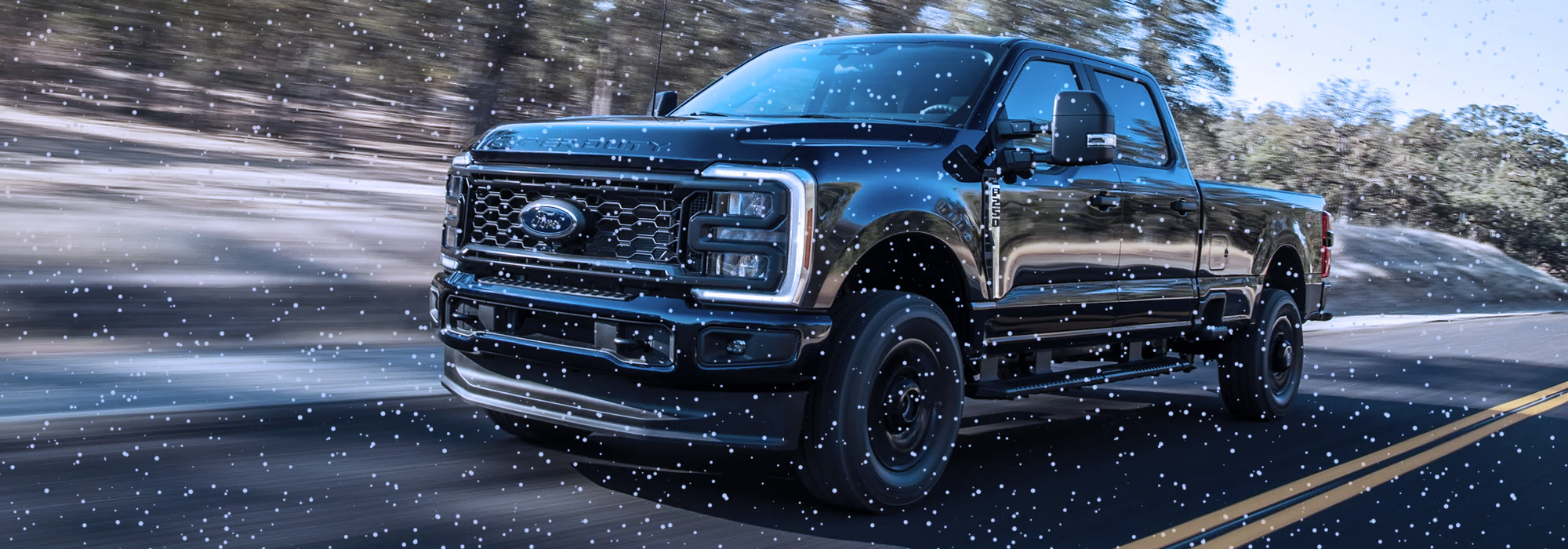
Ford’s Super Duty trucks are well equipped to tackle winter’s toughest challenges, especially with the Ford Snowplow Prep Package. Whether you’re clearing driveways, helping out neighbors, or maintaining a property, Aschenbach Ford has the resources and expertise to help you choose the right fitted snowplow setup for your Ford truck. Winter weather can be tough, but with the right equipment, you’ll be ready for whatever the season brings. Visit us today in Wytheville, VA!
Ford Snow Mode Explained

Ford Snow Mode Explained: Drive With Confidence This Winter
Winter driving often brings unique challenges, especially with snow and ice-covered roads. Ford’s Snow Mode, available on popular models like the Ford Explorer, Ford Escape, Ford Expedition, Ford F-150, and Ford Bronco Sport, was engineered to handle these slippery conditions by enhancing vehicle stability and traction. When activated, Snow Mode optimizes the throttle response, transmission, and traction control to reduce wheel spin, allowing drivers to maintain better control on snow-covered surfaces. Aschenbach Ford is committed to helping drivers feel safe in winter conditions, and this innovative feature is just one example of Ford’s dedication to safer driving experiences.
Visit Aschenbach Ford to explore the lineup of Ford models, including the Ford Explorer with Snow Mode and the Ford F-150 with Snow Mode, and confidently prepare for winter driving!

How Does Ford Snow Mode Work With Traction Control?
With Snow Mode engaged, your Ford will automatically make adjustments that optimize control. The accelerator pedal response is adjusted to ensure smoother and more controlled acceleration, reducing the risk of skidding. The engine’s power output is moderated to minimize sudden surges, which helps avoid the common pitfall of skidding on icy roads. Transmission shifts become smoother and less aggressive, contributing to an even power distribution to each wheel for greater stability. Ford Escape Snow Mode and Ford Expedition Snow Mode also utilize enhanced traction control to detect and prevent excess wheel spin.
When Should You Use Ford’s Snow Driving Modes?
This mode is handy for snowy or icy conditions but can also provide better control on other slippery surfaces, like wet leaves, mud, or sand. Ford Snow Mode is particularly effective in deep snow, where maintaining traction and control is crucial. With your Ford Bronco Sport G.O.A.T. Modes™ or Ford Expedition or F-150 Terrain Management System™, Snow Mode will be one of several options, ensuring you’re prepared for whatever the road — or off-road — throws at you.
Ford Snow Mode Benefits in Deep Snow
Ford Snow Mode delivers the peace of mind you need to face winter head-on. By adapting to low-traction situations, Snow Mode reduces the chances of sliding and helps maintain stability, which is especially valuable when navigating sharp turns, inclines, or descents on snowy terrain. Compared to other driving modes, Snow Mode offers specialized adjustments that are particularly beneficial in winter conditions.

Experience Ford Snow Mode
Want to learn more about Ford Snow Mode and other drive settings? In addition to Snow Mode, Ford vehicles like the Ford F-150, Ford Escape, and Ford Explorer offer other drive settings like Eco Mode for fuel efficiency and Sport Mode for enhanced performance. Visit Aschenbach Ford, where our team can walk you through these features and even set you up with a test drive. Drive confidently this winter by exploring Ford’s Snow Mode — stop by today and see how Ford’s technology can help you conquer winter roads safely and comfortably.
Best Ford Models In The Snow

Ready For the Winter Roads
When winter rolls around, the road ahead can become unpredictable, with snow, ice, and freezing temperatures making everyday driving more difficult without the best Ford models in the snow. Whether you’re tackling snow-covered highways, icy rural roads, or simply maneuvering through your neighborhood after a storm, you need a vehicle that’s dependable, safe, and designed to handle whatever winter throws your way. At Aschenbach Ford, we offer options for the best SUV and other Ford models in the snow and ice, with specific features like all-wheel drive systems, traction control, and adjustable terrain management that make them reliable for winter driving. Our experts are ready to help you find the right ride for any weather or climate so that you can drive safely in any environment. Visit us today in Wytheville, VA!

Ford Edge In The Snow
The Ford Edge shines as a standout crossover, blending practicality with robust performance to handle all of winter’s toughest conditions. Its Intelligent all-wheel drive system continuously monitors traction, seamlessly shifting power between the front and rear wheels for optimal grip on icy or snow-covered roads. For those slick situations, the Ford Edge’s unique Slippery drive mode fine-tunes throttle response and adjusts the transmission for enhanced stability, giving you greater confidence behind the wheel. Whether you’re navigating snowy city streets or icy country roads, these advanced features make the Ford Edge a reliable, go-to vehicle for anyone needing one of the best Ford models in the snow that doesn’t compromise on comfort or versatility.
Ford Explorer In The Snow
When navigating harsh winter weather, the Ford Explorer stands tall as one of the best Ford models in the snow, built to conquer snow-covered roads. Its advanced Terrain Management System™ allows you to switch effortlessly between driving modes, including the specialized Deep Snow/Sand mode, which is designed to maximize traction and challenging conditions. Whether you opt for rear-wheel drive or the more robust, Intelligent All-Wheel Drive, the latter is ideal for those regularly dealing with snow and ice. The system is smart enough to disengage when not needed, improving fuel economy without sacrificing performance. With strong engine options and outstanding traction control, the Ford Explorer is more than equipped to handle both city streets and country roads during the winter months, offering a secure and reliable driving experience no matter the conditions.
Ford Maverick In The Snow
The Ford Maverick, while a compact pickup, proves itself to be a solid contender for winter driving. Its all-wheel drive option, paired with selectable drive modes like Slippery, makes it well-suited for snowy or icy conditions, offering enhanced traction and stability when roads are less than ideal. With its high ground clearance, the Ford Maverick is better equipped to handle light snow accumulation, helping drivers maintain control when the weather turns. Despite its efficient design and budget-friendly appeal, the Ford Maverick doesn’t compromise on performance, making it one of the best Ford models in the snow for those seeking a reliable, affordable winter vehicle.
Ford F-150 In The Snow
Ford F-150 is a legendary choice for truck lovers, and its winter performance as one of the best Ford models in the snow only adds to its incredible reputation. Designed with a powerful engine lineup, a capable four-wheel drive system, and generous clearance, this truck can tackle even the most treacherous winter roads with ease. Whether you’re commuting through a heavy snowstorm or heading off-road to a remote cabin, the Ford F-150’s winter-ready features keep you safe and in control. It can even handle situations where roads are blocked by snow or ice, ensuring you reach your destination. Its four-wheel drive system offers multiple modes, including Slippery, to help manage traction on icy or snow-covered roads. Plus, with the option to equip it with snow tires, the Ford F-150 can be even more adept at handling harsh winter conditions.
Ford Bronco In The Snow
The Ford Bronco brings its adventurous spirit into winter driving, proving it’s built for more than just off-roading. With its available four-wheel drive system and G.O.A.T. Modes™, including the specialized Sand/Snow mode, the Ford Bronco is engineered to handle snow-covered roads and icy terrains with ease. Its advanced traction system ensures stability on slippery surfaces, while the Ford Bronco’s durable frame is ready to take on harsh winter elements. Whether you’re navigating through snowy mountain passes or icy back roads, the Ford Bronco provides a rugged, dependable option for winter weather. For those seeking confidence and control behind the wheel, especially in tough winter conditions, the Ford Bronco is one of the best Ford models in the snow.
Ford Escape In The Snow
The Ford Escape is an excellent compact SUV that punches above its weight for winter performance. Its responsive all-wheel drive system quickly adapts to changing road conditions, ensuring reliable traction on snowy and icy roads. The Ford Escape’s compact design makes it highly maneuverable in tight urban spaces while offering enough power and ground clearance to navigate snow-packed rural routes confidently. With its size, capability, and stability control features, the Ford Escape is an ideal winter companion for drivers who want one of the best Ford models in the snow that can easily handle unpredictable winter weather while maintaining efficiency and comfort.

Stay Safe On The Road
Winter driving demands a vehicle built to meet the challenges of snow, ice, and slippery conditions head-on, and at Aschenbach Ford, we’re proud to offer a lineup of the best Ford models in the snow. Whether navigating icy urban streets or heading off the beaten path in rural areas, Ford’s vehicles are designed with features that ensure you stay safe, confident, and in control. Visit us today in Wytheville, VA!
Ford Winter Tire Guide

How Ford Winter Tires Make A Difference
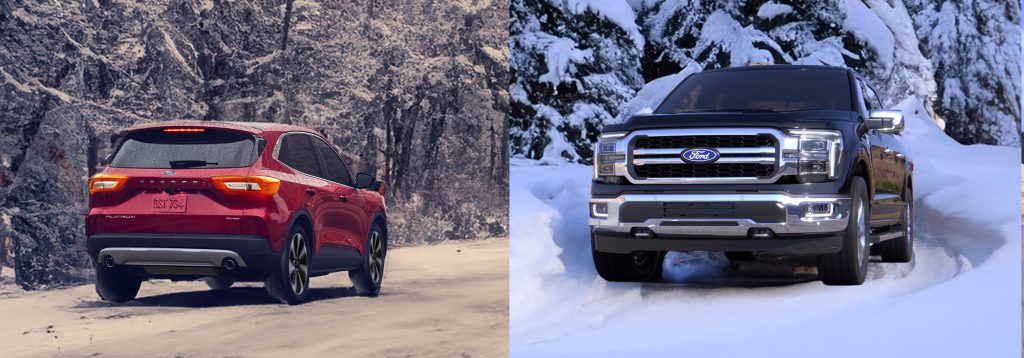
Driving in winter brings distinct challenges, including reduced traction and visibility, which makes investing in snow tires and winter tires crucial for many drivers. Ford is a top automotive manufacturer that provides a variety of winter tire options specifically designed for its popular vehicles, such as the Ford F-150, Ford Escape, and Ford Ranger. At Aschenbach Ford, we’ll provide you with information on the advantages of Ford winter tires for these models, details about the Ford winter tire package, and advice on tire pressure considerations for the winter season. Afterward, feel free to visit our Ford dealer in Wytheville, VA, to find your next vehicle and get ready for the chilly months ahead.
Understanding the Ford Winter Tire Package
Ford winter tires are engineered to excel in cold, icy, and snowy weather. Unlike all-season tires, which are designed to handle a wide variety of conditions, winter tires use specialized rubber compounds and tread patterns that enhance grip and navigate slick surfaces more effectively. Typically, Ford winter tires feature deeper treads and sturdier edges to improve traction on both snow and ice.
Stock tires sometimes fall short in winter conditions due to their less specialized design. Choosing the right tire type and size is crucial for optimal performance, especially handling in snowy environments.
To streamline the process of acquiring the tires you need be prepared, there are various winter tire and wheel packages tailored for various models. These packages generally include four winter tires and wheels selected for compatibility with your vehicle, along with mounting and balancing services. Essential components like tire pressure monitoring sensors may also be included, ensuring that you receive tires optimized for your vehicle’s performance characteristics, thus enhancing safety and driving comfort in winter. Reach out to your Ford dealer in Wytheville, VA, or use the Tire Finder tool on our website to confirm that you’re getting the correct size and type for your vehicle.

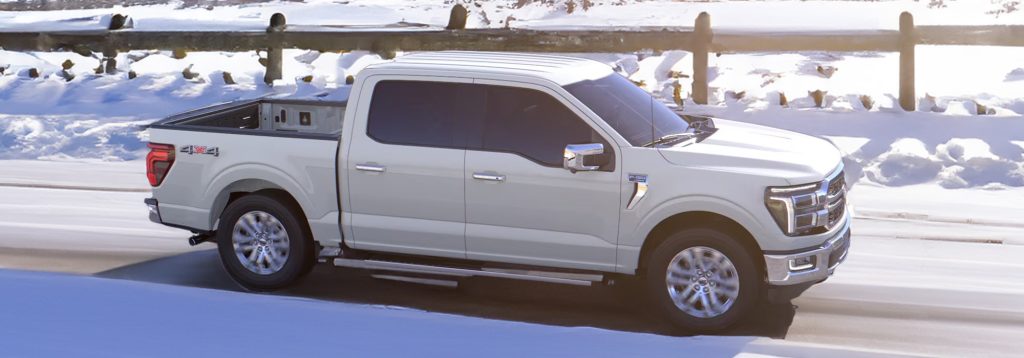
Winter Tires for the Ford F-150
Although it’s Built Ford Tough®, the Ford F-150 requires appropriate winter tires to maintain performance and safety. Driving in deep snow presents significant challenges, making traction control essential for maintaining stability. These robust trucks are built to handle heavy loads and rough terrains, which is why selecting the right wheels is just as critical to achieving optimal results as the tires. Whichever tire you decide to go for, make sure they’re suited to help you trudge through the ice and snow.
Winter Tires for the Ford Escape
The Ford Escape, a compact SUV, significantly benefits from winter tires. While often designed for urban settings and moderate off-road situations, where snow and icy roads are prevalent, it’s important to select the winter tires that deliver excellent traction without sacrificing ride quality. You wouldn’t want your ride skidding in high-traffic areas or uneven terrains where an accident could affect others beside yourself.
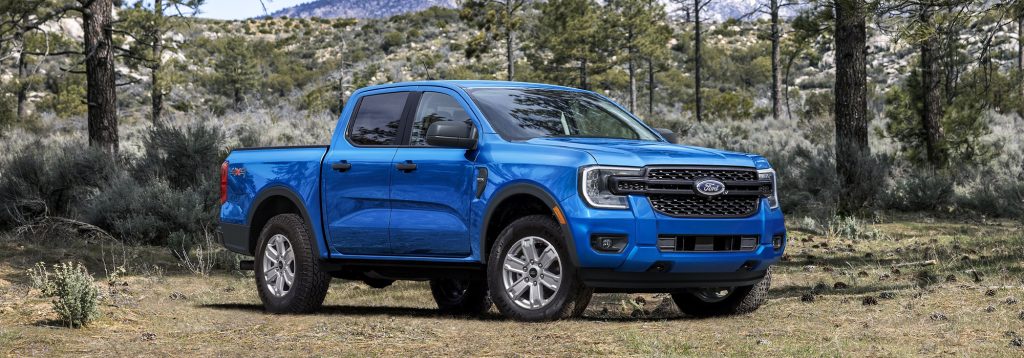
Winter Tires for the Ford Ranger
As a midsize pickup truck designed for work, play, and everything in between the Ford Ranger also needs specialized winter tires to handle tough conditions. Winter tires that provide exceptional grip and stability during colder times are ideal. From carrying heavy loads, like trailers or work materials to enjoying its share of off-road adventures, Ford winter tires are required to keep it performing at an exceptional level.
Tire Pressure Guidelines
Maintaining the correct tire pressure for Ford winter tires is essential for optimal performance. Cold temperatures can cause the air to contract, leading to reduced tire pressure. It’s advisable to regularly check your tire pressure to determine the ideal PSI rating, which can typically be found on the tire itself or on the driver-side door jamb. It’s recommended to inflate your tires by 3-5 PSI above this value to help stabilize driving conditions in colder weather. The design of winter tires enhances their flexibility in frigid temperatures, improving traction on snow and ice, but this may affect responsiveness, which is why the 3-5 PSI increase is suggested.
Prepare for Winter
Equipping your Ford vehicle with the right winter tires is crucial for safety and performance during the winter season. By understanding the unique requirements of each model, such as the Ford F-150, Ford Escape, and Ford Ranger, you can choose tires that align with your driving style and conditions. Additionally, routine maintenance and tire pressure checks are vital for maximizing the benefits of Ford winter tires. By taking these steps, you can confidently navigate winter roads wherever you go. Start your journey by contacting the team at Aschenbach Ford or visiting our website to find the perfect Ford winter tires for you!
Ford Escape Cold Weather Package

Ford Escape Cold Weather Package: What’s Inside and Is It Right for You?
As winter approaches, drivers in colder climates know that navigating icy roads and frosty mornings can be a challenge. For those looking to enhance their comfort and safety during the colder months, Ford offers the Cold Weather Package for the Ford Escape. Available for select models, this package bundles a variety of features aimed at making winter driving easier and more enjoyable. Join Aschenbach Ford as we dive into the details to help you decide if it’s a worthy addition for your next vehicle.

Understanding the Ford Escape Cold Weather Package
The Cold Weather Package is an add-on designed for drivers of the Ford Escape Active and ST-Line cars. It offers a suite of features tailored for cold-weather driving. It’s important to note that this package is included with all-wheel-drive versions of the Ford Escape and is available as an add-on for drivers preferring front-wheel drive.
Key Features of the Cold Weather Package: Heated Mirrors
Ford has equipped this package with features to address the typical challenges of winter driving, providing comfort and enhancing visibility.
- Heated Exterior Mirrors with Rear Defrost: These heated mirrors reduce fogging and ice buildup, ensuring a clear line of sight in freezing temperatures. The rear defrost system works in tandem, ensuring your back window stays ice-free for better visibility.
- Remote Start Capability: Why face the chill when you don’t have to? With the remote start system, you can warm up your Ford Escape from inside your home, getting the interior nice and toasty before you even step out the door.
- Heated Front-Row Seats: Both the driver and front passenger can enjoy the warmth of heated seats, making winter drives much more comfortable, especially on frosty mornings.
- Heated Steering Wheel: No more icy steering wheels on those cold days. This feature adds an extra touch of luxury and comfort by keeping your hands warm as soon as you start driving.
Heated Side Mirrors: Enhancing Safety and Visibility
Heated side mirrors are a game-changer when it comes to driving in cold weather. These mirrors are designed to defrost and clear fog, snow, and ice, ensuring you have a clear view of your surroundings. This feature significantly enhances safety and visibility, reducing the risk of accidents caused by obscured mirrors.
One of the standout benefits of heated side mirrors is their convenience. When you activate the rear defrost, the heated mirrors kick in automatically, saving you the hassle of manual scraping or defrosting. This is particularly useful for those living in regions with harsh winters or frequent fog.
Ford makes heated side mirrors a standard feature on many of its vehicles, including certain configurations of the Ford Escape. However, if your model doesn’t come with this feature, you might consider upgrading to heated side mirrors to enjoy the same level of safety and convenience.
Remote Start Functionality: Convenience at Your Fingertips
Imagine stepping into a perfectly warmed car on a freezing morning or a cool, comfortable vehicle on a scorching day. That’s the magic of remote start functionality. This feature allows you to start your vehicle from a distance, ensuring the interior is at your desired temperature before you even open the door.
The remote start system is typically activated using a key fob or intelligent access transmitter. Once activated, it can start the engine, adjust the climate control, and even set the seats and mirrors to your preferred positions. Some vehicles come with a memory function that recalls these settings, adding an extra layer of convenience.
Ford’s remote start system is designed with flexibility in mind. You can start your vehicle from up to 300 feet away, and the system can be programmed to run for a set period. However, it’s crucial to follow the manufacturer’s guidelines and warnings to avoid any potential risks or hazards.
Advantages of the Cold Weather Package
This package offers more than just comfort — it delivers added safety and convenience, too. Here’s how it benefits drivers.
- Increased Comfort: The heated seats and steering wheel ensure that you’re cozy, even on the coldest days, making daily commutes or long trips more pleasant.
- Better Visibility: The heated mirrors and rear defrost system provide a clearer view of the road, contributing to safer driving in icy or snowy conditions.
- Time-Saving Convenience: The remote start feature allows you to skip the discomfort of waiting in a cold car while it warms up, saving you time and effort during your morning routine. It’s important to note that power windows will not function during the remote start process, highlighting a specific limitation of the vehicle’s capabilities.
- Enhanced Resale Value: For those looking to sell or trade in their vehicle in the future, the Cold Weather Package could increase the appeal of the Ford Escape, especially in colder regions.
How the Package Improves Your Winter Driving Experience
The Cold Weather Package transforms your Ford Escape into a winter warrior, making daily driving less stressful and more comfortable. By heating up the interior and exterior before you even start driving, the package saves you from battling the cold and scraping ice off mirrors. Heated seats add an extra layer of comfort, while the heated steering wheel means you won’t need to rely on gloves to stay warm.
This package is more than just an accessory — it enhances your entire winter driving experience. With improved visibility from the heated mirrors and rear defrost, you’re better equipped to handle challenging road conditions. It also ensures a smoother, warmer ride, making harsh winter days much easier to endure.
Is the Cold Weather Package a Good Investment?
For drivers regularly facing cold temperatures, snow, or ice, the Cold Weather Package is a practical and worthwhile investment. The added comfort and convenience it provides, combined with the safety features, make it an appealing option. If you live in an area that experiences tough winters, the ability to stay warm and prepared with this package may outweigh the cost, especially with the peace of mind it brings.

Elevate Your Winter Driving with the Cold Weather Package
For anyone who drives in colder climates, the Ford Escape’s Cold Weather Package offers an impressive blend of comfort, safety, and convenience. From heated mirrors and a remote start system to the warmth of the heated seats and steering wheel, this package is designed to make winter driving far more manageable and enjoyable.
While it adds to the cost of the vehicle, the Cold Weather Package is a smart investment for those prioritizing winter comfort and safety, transforming cold-weather commutes into a more pleasant experience. If you’re looking to stay ahead of the frost, this package could be just what you need to enhance your Ford Escape’s performance this winter. Find your perfect Ford Escape at Aschenbach Ford.
Ford F-150 Maintenance Guide

Ford F-150 Recommended Maintenance Schedule
Caring for your Ford F-150 means understanding the vital role that each Ford F-150 maintenance task plays in preserving the integrity and longevity of your reliable, durable vehicle. From routine oil changes that keep the engine purring like new to more intricate tasks like spark plug replacements that ensure optimal fuel efficiency, every component of your Ford F-150 is interconnected. At Aschenbach Ford, our team of expert technicians is committed to helping you preserve the integrity of your truck through a meticulous maintenance schedule tailored to your Ford F-150’s unique needs. Schedule your next service appointment with us online today!
For detailed maintenance schedules, always refer to the owner’s manual to ensure proper care and longevity of your vehicle.

Routine Maintenance Schedule: What To Expect During Service At Each Mileage
These services include essential inspections, replacements, and repairs necessary to ensure the vehicle’s performance and longevity.
Oil and Oil Filter Replaced
Engine oil keeps your Ford F-150’s internal engine parts clear of friction while protecting against damage. Replacing the oil and having the oil filter replaced around every 5,000 and 10,000 miles during your Ford F-150 maintenance appointment ensures that the oil doesn’t become contaminated with dirt and debris that clogs or damages the engine.
Rotate Tires
We advise that you rotate your Ford F-150’s tires around every 5,000 miles to ensure uniform wear across all four tires. This not only prolongs the life of the truck tires but also improves traction and handling for a safer driving experience.
Inspection Of Belts, Hoses, and Fluids
During the routine Ford F-150 maintenance appointment, it’s important to check all vital vehicle components like belts, hoses, and fluid, as well as to top off other vital fluids like brake fluid, transmission fluid, coolant, and windshield washer fluid. Additionally, it is crucial to have the filters replaced to ensure the vehicle remains in safe and drivable condition.
Ford F-150 30K Mile Maintenance: Replacing Filters and Fluids By Mileage
Replace Engine Air Filter
The engine air filter prevents dirt, dust, and debris from entering the engine for optimal vehicle performance and lasting fuel efficiency. A clogged air filter reduces engine power and increases fuel consumption, so it’s important to replace it around every 30,000 miles.
Cabin Air Filter Replaced
The cabin air filter ensures no allergens, dust, or pollutants enter into the Ford F-150’s interior via the air conditioning system, and it is important to have the cabin air filter replaced at regular intervals, starting from 20,000 miles and continuing every 20,000 miles thereafter.
Fuel Filter Replacement
Replacing the fuel filter around every 30,000 miles at your Ford F-150 maintenance appointment helps keep out contaminants that lead to poor truck engine performance and reduced fuel efficiency.
Transmission Fluid Service
Automatic transmission fluid and filters can deteriorate and become polluted, which may increase issues with shifting and could potentially harm the transmission. A transmission fluid service around every 30,000 miles helps maintain smooth shifting, prolonging the life of the transmission.
Lubricate Ball Joints
Ball joints facilitate seamless and precise maneuverability of the front tires. Regularly greasing the ball joints approximately every 30,000 miles during your Ford F-150 maintenance appointment aids in reducing wear and tear, thus extending their service life.
Ford F-150 Maintenance After 60,000 Miles: Replacement And Flushing By Mileage
Clean and Repack Wheel Bearing
Cleaning and repacking the wheel bearings with fresh grease around every 60,000 miles at the Ford F-150 maintenance appointment helps maintain proper wheel function and prevent costly repairs down the road.
Replace Spark Plugs
Spark plugs deliver the necessary spark to ignite the air-fuel mix within the engine’s cylinders, and they typically need to be replaced near the 90,000-mile mark. Deteriorated or contaminated spark plugs can cause engine misfires, diminished fuel efficiency, and decreased engine power.
Cooling System Flush
Coolant becomes contaminated from regular use over time, thus losing its effectiveness and leading to engine overheating if not replaced. Flushing the cooling system of your vehicle at around 100,000 miles helps remove contaminants for proper coolant system function.
Positive Crankcase Ventilation Valve Replacement
The PCV valve helps prevent harmful gases from building up in the vehicle’s engine. Replacing it around every 20,000 miles after 100,000 miles at your Ford F-150 maintenance appointment helps maintain proper engine function.
Replace Differential/Gear Oil
The differential and gear oil lubricate the gears in your truck’s drivetrain, but they can break down and become contaminated over time, leading to increased wear on the gears. Replacing the differential and gear oil around every 50,000 miles after the 100,000 milestone for the remainder of your truck’s lifespan helps prolong its drivetrain for years to come.
Ford F-150 Maintenance Cost: Vehicle Care Prices Following The Maintenance Schedule
Maintaining your Ford F-150 is crucial, and it’s vital to understand the expenses involved in its regular maintenance and repairs. The maintenance costs for your Ford F-150 can vary based on various aspects, such as the truck’s age, the particular model, your driving habits, and the pricing available at our service center.

Taking Care Of Your Ford F-150: Vehicle Maintenance Care For Your Truck
By consistently committing to Ford F-150 maintenance, you can avoid minor problems from growing into significant repairs, ultimately saving you time and money and reducing stress over time. Each oil change, filter replacement, and fluid check is a step toward ensuring that your Ford F-150 continues to perform at its best, delivering the power, reliability, and comfort that your truck is legendarily known for. At Aschenbach Ford, our dedicated technicians support you and keep you happy every step of the way, offering expert advice and top-notch service to keep your Ford F-150 in peak condition. Schedule your next service appointment online today!
Ford Bronco Maintenance Guide

Know Your Vehicle’s Maintenance Schedule
When you get a Ford Bronco or Ford Bronco Sport, you’re driving right into a world that’s all about freedom and enjoying off-road adventures. Hitting the trails hard can take its toll on your ride, meaning you’ll need to keep up with routinely bringing in your Ford Bronco or Ford Bronco Sport in for maintenance. Keeping your vehicle in top shape is easy when you follow the Ford Bronco and Ford Bronco Sport maintenance schedule and book your maintenance visits at Aschenbach Ford. We only use the best parts and the latest tools to make sure your Ford Bronco or Ford Bronco Sport stays in great condition. Book your service with us today online and keep hitting the trails with peace of mind!

Ford Bronco Maintenance Schedule
Routine Maintenance
Regular Oil and Filter Replacement: To ensure the longevity and optimal performance of your Ford Bronco’s engine, change the oil and filter around every 5,000 miles. This Ford Bronco maintenance task removes old, contaminated oil and replaces it with new oil, keeping the engine parts well-lubricated to prevent wear and tear.
Tire Rotation: To ensure optimal longevity and even wear, it’s crucial to rotate your tires approximately every 5,000 miles. By doing so, you can significantly prolong the life of your tires while also ensuring that your vehicle maintains balanced handling and traction.
Inspection of Brakes, Belts, Hoses, and Fluids: Whenever you get your oil and filter changed and tires rotated during your Ford Bronco maintenance appointment, ask the technician to visually inspect your brakes, belts, hoses, and fluid levels thoroughly for signs of wear or damage.
Maintenance By Mileage At and Before 30,000 Miles
Engine Air Filter Replacement: The engine air filter acts as a critical defense, blocking dirt, dust, and various contaminants from entering the engine. For optimal engine health and maximum performance, it’s advisable to replace the air filter approximately every 15,000 miles.
Cabin Air Filter Check and Replacement: It’s essential to regularly replace the cabin air filter when you bring your Ford Bronco for maintenance to ensure the air inside your vehicle remains free of pollutants, dust, and allergens, contributing to a healthier and more pleasant driving environment for both you and your passengers.
Brake Pads and Rotors Inspection: Checking brake pads and rotors every 25,000 miles during your Ford Bronco maintenance appointment is crucial to maintain their proper functioning. Degraded brake pads can result in costlier fixes and hazardous driving scenarios.
Tire Inspection and Replacement: Ensuring the safety and performance of your vehicle is a top priority, and regular tire inspections play a key role in achieving this. By inspecting your tires every 20,000 to 30,000 miles for wear, damage, and inflation, you can maintain optimal traction and handling.
Brake Fluid Replacement: Brake fluid maintains your vehicle’s braking system’s effectiveness, serving as the channel through which the pressure from the brake pedal is transferred to the brake mechanisms. Replace the brake fluid around every 30,000 miles during your Ford Bronco maintenance appointment.
Engine Coolant Swap: Engine coolant is essential for maintaining your engine’s optimal temperature by efficiently removing excess heat. Although coolant can degrade over time, it’s easy to maintain its effectiveness by replacing it every 30,000 miles.
Transmission Fluid Change: Regularly changing your transmission fluid every 30,000 miles at your Ford Bronco maintenance appointment is a simple yet effective way to ensure smooth gear shifts, prevent overheating, and maintain the performance and longevity of your transmission.
Spark Plug Inspection and Replacement: Spark plugs play a crucial role in igniting the air-fuel mixture within the engine cylinder, facilitating the combustion necessary for the engine’s smooth operation. If spark plugs are worn or faulty, they can result in misfiring, decreased fuel efficiency, and compromised engine performance.
Vehicle Maintenance After 50,000 Miles
Motor Mount Inspection and Replacement: Motor mounts play a critical role in securely attaching the engine and transmission to a vehicle’s frame, and are susceptible to wear and tear. Replace them every 50,000 to 60,000 miles at your Ford Bronco maintenance appointment to maintain the stability of the engine and transmission.
Drive Belts and Hoses Check and Replacement: Belts and hoses are important for alternator, power steering pump, and air conditioning compressor functionality. Inspecting and replacing them every 50,000 to 65,000 miles helps prevent failures that could lead to engine overheating or loss of power steering.
Suspension Bushings Inspection and Replacement: Bushings are essential in decreasing noise and vibrations, ensuring the vehicle remains stable and handles well. Checking and replacing them around every 50,000 to 65,000 miles can help ensure a comfortable and stable ride.
Shock Absorber and Strut Replacement: Shock absorbers and struts are vital components of the suspension system, responsible for regulating the behavior of the vehicle’s springs to enhance the driving experience with a smoother ride. Replace the shock absorbers and struts around every 75,000 miles at your Ford Bronco maintenance appointment.
Engine Coolant Hose Inspection and Replacement: The coolant hose plays a crucial role in your vehicle’s cooling system by transporting coolant between the engine and the radiator. However, it is prone to wear and tear — leading to deterioration, cracking, or leaks, resulting in coolant loss and engine overheating. Inspect and replace any damaged hoses around every 90,000 miles.
Ford Bronco Maintenance Cost
Maintaining a Ford Bronco or Ford Bronco Sport involves several routine services that ensure the vehicle remains in top condition, but it’s also important to consider the associated costs for a Ford Bronco maintenance appointment. Ford Bronco and Ford Bronco Sport maintenance costs depend on your usage of the vehicle, its age, and the rates available in your area.

Fast, Convenient Online Scheduling
Regular maintenance for your Ford Bronco or Ford Bronco Sport helps extend the vehicle’s lifespan and ensures it remains safe, efficient, and ready for any adventure. At Aschenbach Ford, our team is equipped to handle any challenge or regular maintenance tasks your vehicle needs while providing absolute transparency about your Ford Bronco and Ford Bronco Sport maintenance costs, guaranteeing that your adventures are always safe, enjoyable, and memorable. Schedule your appointment online to book your next service today!
Ford Escape Maintenance Guide

Taking Care Of Your Ford Escape
The trusted Ford Escape is known for being reliable in every circumstance, from weekend adventures to daily commutes. Ensuring your Ford Escape remains reliable and performs at its best requires a diligent and consistent Ford Escape maintenance routine. At Aschenbach Ford, our expert team is here to help you every step of the way, from providing master-level service to equipping you with all the essential information to keep your beloved SUV in prime condition. Visit us today in Wytheville, VA!

Ford Escape Maintenance Schedule
Routine Maintenance
Change Oil and Filter: Regular oil changes are the lifeblood of your vehicle. Fresh oil in your car ensures that your engine runs smoothly, reduces friction, and prevents overheating by cooling the engine. At every 5,000-mile interval, have the technician change the oil and filter to keep your engine clean and well-lubricated.
Rotate Tires: Tire rotation is vital for even tire wear and extended tire life. Rotating your tires at every 5,000-mile Ford Escape maintenance appointment helps distribute the wear more evenly, enhancing the safety and performance of your Ford Escape. This service also allows the technician to detect debris like nails or glass that could cause an unexpected flat tire down the road.
Inspect Brakes, Belts, and Hoses: Regular inspections of your brakes, belts, and hoses can prevent significant issues down the road. Brakes ensure your vehicle can stop safely, belts drive various engine components, and hoses transport essential fluids. Checking these components every 5,000 miles ensures your vehicle’s critical systems function correctly and can help you avoid unexpected breakdowns.
Mileage-Based Maintenance At And Before 30,000 Miles
Replace Engine Air Filter: The engine filter removes dirt and debris from your engine. Replacing it during your Ford Escape maintenance appointment every 10,000 mi., starting at around 20,000 miles, ensures that your engine breathes clean air, improving performance and fuel efficiency.
Replace Cabin Air Filter: The cabin air filter keeps the air quality high inside the cabin of your vehicle by filtering out dust, pollen, and other pollutants. A fresh cabin air filter provides clean air for you and your passengers, enhancing comfort and reducing allergens. As with the engine air filter, changing this every 10,000 miles, starting at around 20,000 miles, can help keep your engine healthy and working correctly.
Transmission Fluid Service: Transmission fluid lubricates and cools the transmission, ensuring smooth gear shifts. Servicing the transmission fluid every 30,000 miles during your Ford Escape’s maintenance appointment helps maintain optimal transmission performance and prevents costly repairs.
Lubricate Ball Joints: Ball joints are crucial for your vehicle suspension system, allowing for smooth steering and suspension movement. Lubricating them around every 30,000 miles keeps your suspension in good working order, providing a smoother ride and better handling.
Replace Fuel Filter: The fuel filter ensures that your engine receives clean fuel by filtering out impurities. Having the fuel filter replaced every 30,000 miles helps keep excellent fuel efficiency and engine performance.
Car Maintenance After 90,000 Miles
Replace Spark Plugs: The spark plugs of your vehicle ignite the air-fuel mixture and engine cylinders. Wearing or dirty spark plugs can cause misfires, reduced fuel efficiency, and poor engine performance. Replace them around every 90,000 miles at your Ford Escape’s maintenance appointment.
Flush Cooling System: The cooling system prevents the engine from overheating by moving the coolant around through the engine and radiator. Flushing the cooling system at around 100,000 miles removes old coolant and contaminants, ensuring your engine stays cool under all conditions.
Replace Differential/Gear Oil: Differential and gear oil lubricates the gears and bearings in your vehicle’s differential and transmission, and the oil can break down or become contaminated. Replacing this oil at around 100,000 miles during your Ford Escape’s maintenance appointment helps maintain proper lubrication and extends the life of these critical components.
Replace Positive Crankcase Ventilation: The PCV system removes harmful gases from the engine crankcase and recycles them through the engine to be burned off. A malfunctioning positive crankcase ventilation valve can lead to engine deposits and increase emissions, and replacing it around 100,000 miles helps reduce these issues.
Replace Serpentine/Drive Belts: Serpentine and drive belts with the function and health of various parts of the vehicle, including the alternator, air conditioning compressor, and power steering pump. Replacing them at around 150,000 miles prevents belt failure and ensures all engine accessories operate smoothly.
Replace Transfer Case Fluid: The transfer case fluid lubricates the gears, bearings, and transfer case, which are part of the all-wheel and four-wheel drive systems. Replacing this fluid at around 100,000 miles helps maintain optimal performance and prevents wear on these critical components.
Ford Escape Hybrid Maintenance
For Ford Escape Hybrid owners, maintenance is slightly different due to the hybrid powertrain. Hybrid-specific components, such as the high-voltage battery and electric motor, require less frequent servicing but should be inspected periodically by trained technicians. Regular checks of the regenerative braking system and the cooling system for the battery are crucial.
Ford Escape Maintenance Costs
The cost of maintaining your Ford Escape is dependent on the various rates of your local service provider. You can also expect maintenance costs to change based on your driving habits and what you use your vehicle for.

It’s Time For Your Appointment
By following the detailed Ford Escape maintenance plan outlined above and referring to your vehicle’s manual, you can ensure that your car delivers top-notch performance, safety, and comfort. At Aschenbach Ford, we are dedicated to providing you with the highest level of service and expertise, ensuring your Ford Escape receives the care it deserves. Our skilled technicians can help you keep your Ford Escape running smoothly so you can get back on the road in no time. Schedule your appointment online to book your service appointment today!
Ford Explorer Maintenance Guide

A Comprehensive Guide To The Ford Explorer Maintenance Schedule
The Ford Explorer is one of the most exciting, reliable, and versatile SUVs on the market, ranked with top safety ratings and engineered to elevate how you commute and adventure. Taking care of your Ford Explorer is absolutely essential for keeping this vehicle in optimal condition, ensuring that it continues at its peak performance. Bring your vehicle to Aschenbach Ford’s service center for premium Ford Explorer maintenance. Adhering to the vehicle’s maintenance schedule is vital for maintaining strong performance, reliability, and increasing the longevity of the vehicle. At Aschenbach Ford, we believe in and prioritize empowering our customers with the knowledge they need to keep their vehicles in top condition, and have created this guide to help vehicle owners know exactly when to make their maintenance appointments. Make your appointment and visit us in Wytheville, VA!

The Importance of Regular Maintenance: When To Bring Your Ford Explorer In For Service
Regular Ford Explorer maintenance is the key to prolonging the life of your vehicle and ensuring it operates efficiently. Here’s a thorough breakdown of when to bring your vehicle in for maintenance.
Every 5,000 Miles
- Oil and Filter Change: Getting a regular oil change, including changing the engine oil and oil filter, are vital for engine health and should be performed during nearly every Ford Explorer maintenance appointment. A fresh oil change lubricates engine components, reducing wear and tear.
- Tire Rotation and Inspection: Rotating your tires ensures even wear on the tread, extending their lifespan. This can also help to identify issues such as uneven tread wear or damage like holes, nails, or glass.
- Brake Inspection: Checking the brake system, including brake pads, rotors, and fluid levels, is essential to stay safe on the road.
Every 15,000 Miles
- Multi-Point Inspection: A multi-point inspection involves checking the exhaust system, steering system, brakes, and cooling system to ensure the vehicle’s overall performance and safety.
Every 20,000 Miles
- Engine Air Filter Replacement: A clean engine air filter improves fuel efficiency and performance by ensuring proper airflow to the engine.
- Cabin Air Filter Replacement: Having the cabin air filter changed during your Ford Explorer maintenance appointment keeps the air inside of your vehicle clean, preventing any toxins or air pollutants from entering the vehicle.
Every 30,000 Miles
- Transmission Fluid Check: Ensuring the transmission fluid is at the proper level and in good condition helps maintain smooth gear shifts.
- Lubricate Ball Joints: Proper lubrication of the ball joints ensures smooth steering and suspension performance.
Every 60,000 Miles
- Clean and Repack Wheel Bearing: Regular cleaning and repacking of wheel bearings helps to prevent wear and tear, ensuring smooth wheel rotation.
Every 90,000 Miles
- Replace Spark Plugs: Spark plugs ignite the air-fuel mixture in the engine. Replacing them at recommended intervals for Ford Explorer maintenance ensures efficient combustion and optimal performance.
Every 100,000 Miles
- Coolant System Flush: The coolant system helps prevent your Ford Explorer’s engine from overheating. To prevent overheating, checking and topping off coolant levels is crucial for engine longevity.
- Fuel Filter Replacement: A new fuel filter gives your Ford Explorer’s engine a fresh start, ensuring that the fuel system stays clean and efficient for optimum performance.
- Positive Crankcase Ventilation Valve Replacement: The PCV valve helps to remove gases from the engine, thereby reducing emissions and improving engine efficiency.
Every 150,000 Miles
- Transfer Case Fluid Replacement: Replacing the transfer case fluid ensures that the system operates smoothly, especially in 4WD models.
- Serpentine/Drive Belt Replacement: The serpentine belt powers multiple engine components, and replacing it prevents breakdowns, ensuring that all systems operate efficiently.
- Differential/Gear Oil Replacement: Replacing the differential oil helps ensure that the gears and axles of your Ford Explorer rotate and operate smoothly.
Ford Explorer Hybrid Maintenance Schedule
One major perk of driving a hybrid is that they generally do not require as much maintenance as gas vehicles. If you drive a hybrid, Ford Explorer maintenance looks more like regular checks and inspections to ensure that the vehicle’s components are functioning properly. It is also important to check the engine filter during regular maintenance to ensure proper airflow to the engine. Whenever you bring in your Ford Explorer hybrid for routine maintenance such as tire rotations and oil changes, ask that they inspect your vehicle’s battery, high-voltage cables, and electric motor cooling system. For more insight, consult your Ford Explorer’s maintenance guide in the vehicle operating manual or access Ford’s maintenance schedule tool online.
Ford Explorer Maintenance Cost
Understanding the cost of maintaining your Ford Explorer is important if you intend to plan ahead and budget accordingly for future maintenance appointments. The Ford Explorer maintenance prices can vary significantly, and will depend on your usage of the vehicle.

Getting You Back On The Road In No Time
Taking care of your Ford Explorer and regularly keeping up with the Ford Explorer maintenance schedule is absolutely vital for ensuring vehicle longevity, performance, and even safety in the long run. At Aschenbach Ford, we pride ourselves on providing top-notch service by our master technicians, and promise expertise for all of your Ford Explorer maintenance needs. Our certified technicians are trained to handle both conventional and hybrid models, ensuring your vehicle receives the best care possible. Consulting the owner’s manual for the precise maintenance schedule is crucial. Schedule service online and visit us in Wytheville, VA.
Connect with us

