Blog / Wytheville Ford Dealer

Which Electric Vehicles Qualify For A Tax Credit?

EVs That Qualify for Tax Credit

Q: "Is there a federal EV tax credit?"

A: The federal EV tax credit expired on September 30th, 2025.

Electrify Your Drive

Aschenbach Ford is your portal to the future with an innovative lineup of premium electric Ford vehicles that qualify for tax credits in 2025, setting the standard for eco-friendly driving with substantial savings. Whether you’re eyeing your first electric vehicle or considering an upgrade, our expert team is here to help you discover how each model can enhance your driving experience and save you money. We’re committed to simplifying your transition to electric mobility, providing detailed insights into the latest on Ford EVs that qualify for the EV tax credit. Discover which electric Ford vehicles can save you money, while also saving the environment.

EVs That Qualify for Tax Credit

Your Guide to Ford’s Tax-Friendly Electric Vehicles

While eligibility and total tax benefits may vary, Aschenbach Ford offers a lineup of EVs ready to meet you on the showroom floor with these great savings. However, time is running out to save!
The federal tax credit of up to $7,500 for select new EVs and $4,000 for select used EVs is set to expire on September 30, 2025. Let’s take a quick look at the available vehicles that qualify for the EV tax credit 2025 changes:

The Fully Electric Ford F-150 Lightning: Equipped with dual electric motors, The Only EV That Is Also an F-150® is an invigorating re-imagining of the powerful Ford F-150, combining state-of-the-art innovation with robust power and zero emissions. The Ford F-150 Lightning makes no compromise on its ability to tow and haul, making it a viable, sustainable substitute for the classic F-150.

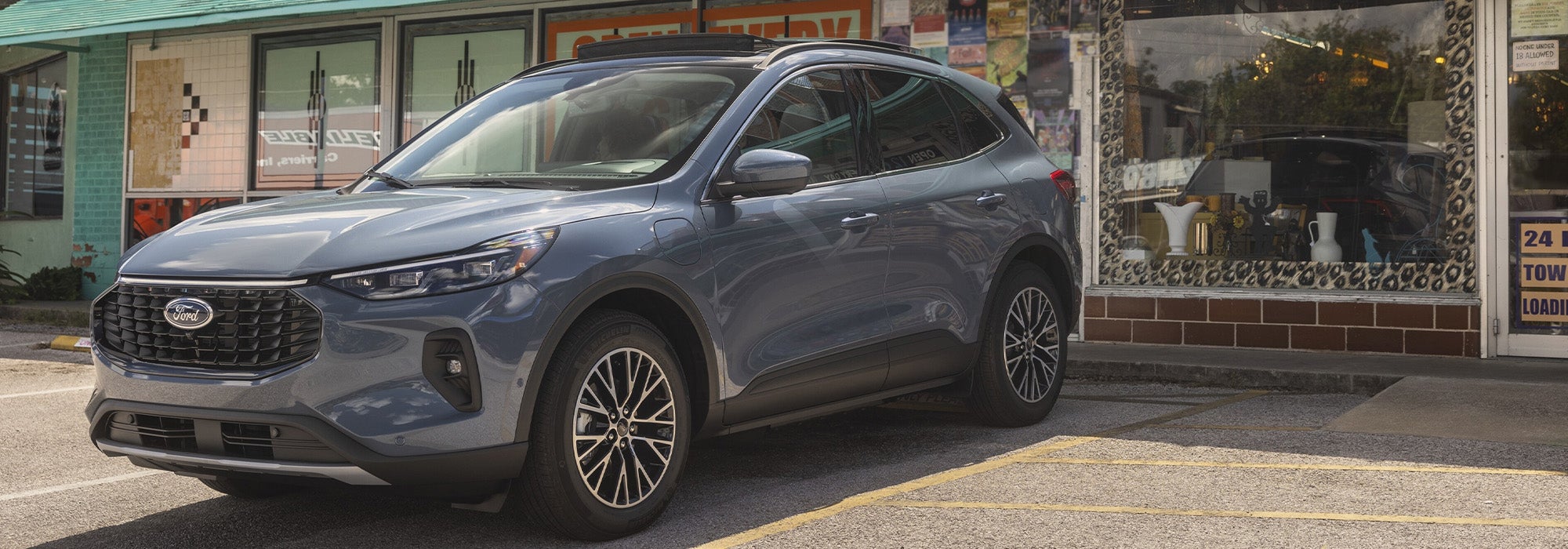
The Clean, Green Ford Escape Plug-In Hybrid (PHEV): In perfect harmony between fuel efficiency and the versatile performance expected of a compact SUV, the Ford Escape Plug-In Hybrid is a compelling choice for those Ford fans curious about eco-conscious driving. Providing electric performance combined with the security of a gasoline engine, the Ford Escape PHEV is the perfect vehicle for drivers who aren’t quite ready to make the full leap to electric, yet still have concerns about making an eco-friendly impact.

Looking for the Ford Mustang Mach-E and E-Transit Van? Unfortunately, these vehicles are not on the list of EVs that qualify for the tax credit in 2025.

To sum it all up, whether you’re a heavy-hauling off-roader seeking a powerful Ford F-150 Lightning or a commuting road-warrior in need of a comfortable compact like the Ford Escape PHEV SUV, Aschenbach Ford offers electric vehicles for every lifestyle. Our automotive professionals are here to help you along your car-buying journey and provide you with everything you need to know about our selection of EVs that qualify for tax credits. Visit us at Aschenbach Ford for more details and to check out our electrifying inventory.

Join the EV Revolution with Aschenbach Ford

At Aschenbach Ford, we’re proud to be your guide to navigating the changing electric vehicle industry and maximizing your 2025 tax benefits. The best part is there’s no need to wait for the 2025 tax season to begin – EVs offer a unique incentive to instantly receive your tax rebate, deducted immediately from your total at time of the vehicle’s purchase. You’ll benefit from saving big right when you buy, without having to wait for 2025 to wrap up! During your visit to our dealership, our professionals are available to provide you with any additional details on eligibility requirements (based upon MSRP range) and help you browse our inventory of EVs that qualify for tax credits. For the most accurate information on the list of EVs and their respective tax credits, visit the IRS website, as the current list may be subject to change. Get behind the wheel of the EV revolution with Aschenbach Ford and drive your way towards a brighter, greener future!

SHOP NOW

Posted in:

Related Posts

AMERICAN VALUE. FOR AMERICAN VALUES.

Employee Pricing For All

AMERICAN VALUE. FOR AMERICAN VALUES. Ford has spent more than 120 years helping move America forward, earning its place on roads, job sites, driveways, and in family memories across the country. Now named the Most Iconic Company in America by TIME and Statista, Ford is celebrating that legacy as the nation approaches its 250th birthday with the AMERICAN VALUE. FOR AMERICAN VALUES. Employee Pricing Event. Aschenbach Ford in Wytheville, VA, is proud to participate in this limited-time event, giving eligible shoppers access to Employee Pricing on select eligible new Ford vehicles. It’s a meaningful opportunity to upgrade with confidence, enjoy real value, and drive home in a Ford vehicle that fits your way of life. Employee Pricing For A Limited Time For a limited time, eligible shoppers can take advantage of Employee Pricing on select eligible new Ford vehicles at Aschenbach Ford during the AMERICAN VALUE. FOR AMERICAN VALUES. Employee Pricing Event. This national Ford event celebrates the values that have shaped the Ford legacy for generations: hard work, craftsmanship, dependability, innovation, and a lasting commitment to communities across America. Ford has long been part of the American story, helping drivers show up for the workday, the school run, the family trip, the growing business, and everything in between. Today, that same purpose continues across a lineup of capable Ford trucks, versatile Ford SUVs, hardworking Ford vans, performance vehicles, and electric vehicles designed for the way Americans drive. Employee Pricing Made Simple The AMERICAN VALUE. FOR AMERICAN VALUES. Employee Pricing Event is a national Ford program available through participating dealers from May 1, 2026, through July 6, 2026. During this event, eligible customers can receive Employee Pricing on select eligible new Ford vehicles. Eligible vehicles may include select new 2025 and 2026 Ford models, such as the Ford Mustang, Ford Mustang Dark Horse, Ford Mustang Mach-E, Ford Bronco Sport, Ford Bronco, Ford Expedition, Ford Maverick, Ford Ranger, Ford F-150, Ford Transit Van, Ford E-Transit, Ford Bronco Raptor, Ford Bronco Stroppe Edition, Ford F-150 Lightning, Ford Super Duty, Ford Escape, and Ford Explorer. Eligibility varies by model year, trim, delivery type, availability, and program rules, and some specialty vehicles are excluded. Our team at Aschenbach Ford can help you confirm which vehicles in our inventory qualify, review current pricing, and walk you through your options. Shop AMERICAN VALUE. FOR AMERICAN VALUES. in Wytheville, VA Ford vehicles are woven into the daily lives of drivers across the country, from work sites and school drop-offs to road trips, errands, and weekend escapes. Here in Southwest Virginia, Aschenbach Ford is proud to help drivers from Wytheville, Marion, Galax, Abingdon, and surrounding Wythe County communities find dependable Ford vehicles that fit their lives. Whether you’re interested in a capable Ford F-150, a versatile Ford Explorer, an adventure-ready Ford Bronco Sport, an efficient Ford Mustang Mach-E, a practical Ford Maverick, or another eligible new Ford vehicle, this event gives you a timely reason to shop. Why Shop With Aschenbach Ford? At Aschenbach Ford, we believe the right dealership experience should feel clear, helpful, and easy from the start. Our team is here to provide upfront guidance, answer your questions, and help you compare eligible Ford models with confidence. During the AMERICAN VALUE. FOR AMERICAN VALUES. Employee Pricing Event, you can shop online or visit our dealership in Wytheville, VA, to explore qualifying new Ford inventory. We’ll help you understand Employee Pricing, review available incentives, and find a vehicle that makes sense for your lifestyle, your business, and your budget. When you shop with Aschenbach Ford, you’re working with a local dealership that values honesty, hospitality, and doing right by our customers. Shop the Event Before It Ends July 6, 2026 The AMERICAN VALUE. FOR AMERICAN VALUES. Employee Pricing Event is only available for a limited time, from May 1, 2026, through July 6, 2026. Inventory and eligibility may vary, so now is the time to explore your options. Visit Aschenbach Ford in Wytheville, VA, give us a call, or browse our new Ford inventory online today. However you choose to shop, our team is ready to help you take advantage of Employee Pricing on select eligible new Ford vehicles during this limited-time Ford event. SHOP NOW

Virginia Title And Registration Fees

Virginia Title, Registration Fees, & Sales Tax

Understanding Title & Registration Costs If you are planning to buy or lease through Aschenbach Ford in Wytheville, VA, it is important to understand how Virginia title and registration fees fit into your total vehicle registration cost. Every time you title or register a passenger vehicle, pickup truck, or other vehicle type in the Commonwealth of Virginia, there are state and local charges to plan for. These costs, along with the Virginia car sales tax rate, all play a role in your final out-the-door price. Knowing how Virginia title and registration fees are calculated can make it easier to compare options, avoid surprises at the DMV, and budget for the full registration process from the start. The Virginia Department of Motor Vehicles oversees vehicle registration fees, titling, and car registration rules for the state. While many drivers only think about Virginia title and registration fees when they are standing in line at the DMV office, it is smart to factor in these DMV fees when you choose your vehicle at Aschenbach Ford in Wytheville, VA. If you have ever wondered “How much are tags in Virginia?,” the answer depends on several pieces of your registration cost that this guide will help explain. This guide walks through how Virginia title and registration fees work, the required documents you will need, and how the team at Aschenbach Ford in Wytheville, VA, can help you move through each step smoothly. What Makes Up Virginia Title and Registration Costs? When you register your vehicle in Virginia, you pay several separate items that, together, are referred to as Virginia title and registration fees. First, there is a vehicle title charge, often called a titling fee, which covers the creation of your official title certificate, also called the Certificate of Title. This document links you as the vehicle owner to a specific Vehicle Identification Number and vehicle record, and it is required before you can complete new registration in the Commonwealth of Virginia. Next, you will see vehicle registration fees and a license fee, which allow you to legally drive on public roads. The exact vehicle registration cost depends on the type of vehicle, its gross weight, and its empty weight. A heavier pickup truck will usually have higher Virginia title and registration fees than a lighter passenger vehicle, and certain vehicle types used for business may carry additional fees or an additional charge under the state fee schedule. Aschenbach Ford can walk you through how your chosen vehicle type affects these DMV fees before you finalize your buyer's order. Taxes are another major part of Virginia title and registration fees. You will owe sales tax on the purchase price or sale price of your vehicle, and in some situations, a use tax may apply. On top of state sales tax, your locality may charge a recurring car tax based on the assessed value of your vehicle. We can help estimate these amounts ahead of time, so that Virginia title and registration fees are built into your budget, not tacked on as an unwelcome surprise later. Getting a Virginia Title Through Aschenbach Ford Anytime you purchase a vehicle in Virginia or move here from a previous state, you will need a Virginia title issued in your name. The vehicle title proves legal ownership and is created from a combination of required documents. For a typical purchase at Aschenbach Ford, you will provide a bill of sale, also called a Buyer's Order, proof of purchase price, and, for some deals, a vehicle price certification that matches the purchase price you agreed to pay. These documents allow the Virginia DMV to confirm the sales tax owed as part of your Virginia title and registration fees. If the vehicle was titled in a previous state, the prior Title Certificate and title number must be surrendered during title transfers. For brand-new units, the dealership will submit the Manufacturer's Certificate, also called the Manufacturer’s Certificate of Origin, so that a Virginia title can be issued in its place. In every case, the DMV will need a completed application and other required documents to attach the title to the correct Vehicle Identification Number and vehicle record on file with the Virginia Department of Motor Vehicles. New resident drivers moving into Virginia have their own timeline for obtaining a Virginia title. When you relocate from a previous state, you will bring your out-of-state documents, proof of address, and a completed application to the DMV office or work through Aschenbach Ford if you are purchasing a replacement vehicle at the same time. This is an ideal moment to let the dealership roll your Virginia title and registration fees into your deal so you can handle vehicle registration and auto insurance changes in a single coordinated visit. How to Register Your Vehicle in Virginia Once the title work is in motion, the next step is to register your vehicle so you can legally drive it in the Commonwealth of Virginia. To register your vehicle, you will complete a registration application and submit it with proof of auto insurance that meets state insurance coverage requirements. Your policy must meet minimum liability insurance coverage and insurance limits before a new registration will be issued. The Virginia DMV online services may also ask for your vehicle inspection paperwork and emissions information, depending on where you live and the type of vehicle you own. Some areas require an emissions test for certain vehicle types, while electric vehicles may have different inspection requirements. During this stage of the registration process, your driving record, valid driver's license, and any related ID cards can also be reviewed, especially if you are registering in Virginia for the first time. All of these pieces come together with your Virginia title and registration fees so the DMV can issue your registration proof and license plates. Taxes, Exemptions, and Special Situations Many drivers only think of Virginia title and registration fees as one number, but taxes and exemptions can make that number higher or lower. Sales tax and use tax are calculated from the purchase price or sale price documented on your bill of sale, proof of purchase price, or vehicle price certification. Some buyers qualify for a tax exemption, such as certain disabled veterans, active-duty members of the U.S. Armed Forces, or other Armed Forces personnel under specific programs. In some cases, law enforcement officers may also be eligible for specialized programs or local relief related to the car tax or Virginia title and registration fees. There are additional situations where Virginia title and registration fees may be adjusted. For example, a new resident bringing a vehicle from a previous state may already have paid a similar use tax and could avoid double taxation if the Department of Transportation rules allow a credit. Some vehicles used for specific purposes may qualify for specialized vehicle registration exemptions or reduced DMV fees. Aschenbach Ford can help you review any possible tax exemption opportunities, so you are not paying more than necessary during vehicle registration. Local governments also play a role in how you experience Virginia title and registration fees. Your locality controls personal property, car tax rates, and some enforcement. If your registration proof is not current, local law enforcement officers, including those from a sheriff’s office, can cite you for expired tags or missing registration. Staying on top of vehicle registration costs and renewal requirements protects you from tickets and keeps your record clean. Renewals, Late Fees, and Keeping Your Registration Current Once your initial Virginia title and registration fees are paid, you will move into the ongoing cycle of vehicle registration renewal. Each year or every few years, depending on the option you chose, you will pay a renewal fee and any current car tax or local tax owed to keep your registration proof valid. Vehicle registration renewal can usually be handled online with a credit card, by mail, or in person. The Virginia DMV sends renewal reminders in advance of your expiration date, but it is still your responsibility to act before late fees apply. Ignoring vehicle registration renewal deadlines can quickly increase Virginia title and registration fees, as penalties, additional fees, and processing fees are added. For drivers who prefer help with keeping track of dates and paperwork, Aschenbach Ford can review your renewal notice during service visits and help you confirm that your registration proof, auto insurance, and vehicle inspection are all up to date. How Aschenbach Ford in Wytheville, VA, Simplifies the Paperwork The paperwork behind Virginia title and registration fees can feel overwhelming, especially if this is your first time purchasing in the state. When you work with Aschenbach Ford in Wytheville, VA, much of the administrative work is handled for you. The dealership team can package your completed application, registration application, required documents, and supporting items such as ID cards, driver's license copies, insurance coverage requirements confirmations, and auto insurance details so that your visit to the Virginia DMV is straightforward. Many customers also appreciate that Aschenbach Ford in Wytheville, VA, can help you understand service fees, processing fees, and any additional charge that might appear when you pay Virginia title and registration fees with a credit card. Whether you are handling car registration as a new resident, navigating title transfers from a previous state, or scheduling vehicle registration renewal, the dealership can offer clear guidance. With organized paperwork and registration proof in hand, you can drive away confident that your Virginia title and registration fees have been handled correctly and that your vehicle is fully compliant in the Commonwealth of Virginia. Visit us today in Wytheville, VA! TALK WITH US
How To Get A Lower Car Payment

How Do You Get A Lower Monthly Car Payment?

How Your Tax Refund Can Help You Drive Home With a Lower Car Payment At Aschenbach Ford, we meet a lot of drivers who look at their statement and immediately wonder, “how do I lower my monthly car payment?” If you are expecting a tax refund this year, it can be a powerful tool for reshaping your car loan payment and overall personal finance plan. Many shoppers search online for how to get a lower car payment, but the real answers depend on your unique financial situation, your current car, and where you are in the car-buying process. Our goal is to walk you through practical, real-world ways to turn that refund into a smarter car purchase or refinance so you can feel more confident every time you make payments. Whether you are shopping for a new car, thinking about a reliable used car, or looking to adjust an existing loan, your refund can act like an instant larger down payment or a targeted lump sum toward what you already owe. Using that amount of money wisely can reduce your monthly costs, cut the amount of interest you pay over time, and ease the financial burden that comes with keeping a vehicle in your budget while you stay focused on how to get a lower car payment that truly fits your life. What a Lower Monthly Payment Really Means for You When you ask us how to get a lower car payment, we start by looking at the numbers behind your monthly loan payment. The key ingredients are your total loan amount, interest rate, loan term, and any taxes or fees that were rolled into your car purchase. Changing even one of these pieces can unlock a lower monthly payment, but each choice affects the overall cost of the vehicle in a different way. A larger down payment using your tax refund immediately reduces the loan amount and the principal balance, which means you are financing a smaller remaining balance from day one. That can help you qualify for a lower interest rate or a lower rate overall and pay less interest across the full time frame of your contract. If you choose a longer loan term, you will usually see a lower payment each month, but a longer term also increases the amount of interest you pay. A shorter term loan often carries a higher monthly bill, yet it can be a good idea if your goal is to pay less interest and own the vehicle free and clear sooner, especially if your top priority is how to get a lower car payment over the life of the loan. Your credit report also plays a big part. Drivers with a higher credit score or even excellent credit often qualify for strong auto loan rates, while shoppers with lower credit may face higher interest rates at first. The good news is that as you stay in good standing on your account and avoid missed payments, your profile can improve over time, and that opens doors for future changes that support how to get a lower car payment. Turning Your Tax Refund Into a Powerful Down Payment One of the simplest answers to how to get a lower car payment is to bring more money to the table on day one. When you apply your tax refund as part of a larger down payment on a new vehicle or on used vehicles that fit your lifestyle, you shrink the loan amount and reduce the remaining loan balance before you even drive off the lot. That can also reduce the sales tax you pay on your car purchase, depending on how your deal is structured in Wytheville, VA. Your refund can team up with the trade-in value from your current car to build that down payment. Using tools such as Kelley Blue Book helps you estimate your car’s current value and car’s value so you can walk into the showroom informed and ready to negotiate. If you can sell your vehicle through a private sale for more than the trade figure, that extra cash can go straight toward your down payment and move you closer to your goal of how to get a lower car payment. In some cases, using part of your refund to pay down your existing loan is the smart move. Reducing your principal balance ahead of schedule can lessen the negative impact of being upside down on the vehicle and may qualify you for gap insurance or strong refinancing terms sooner. Before you do this, talk with our team at Aschenbach Ford in Wytheville, VA, about any prepayment penalties in your contract, so you know exactly how much of your tax refund is going toward how to get a lower car payment instead of fees. Using Your Tax Refund to Restructure or Refinance If your vehicle already fits your needs but the payment doesn't, your tax refund can help you refinance your auto loan to reshape the terms of your agreement. By paying down part of the balance and then applying for a new loan with different lenders, you may qualify for a lower interest rate. This strategy is especially helpful if you started with a high interest rate due to bad credit, and you have since worked hard to rebuild your profile and learn how to get a lower car payment going forward. When you sit down to talk with your current lender, they will review your credit report, your recent payment history, and whether you are in good standing. A stronger credit history, fewer hard inquiry entries, and an improved credit score can all make it easier to secure a lower car payment through updated terms. We can also help you compare offers from a local credit union, banks, and other financial institutions so you can see how to get a lower car payment without taking on more risk than you are comfortable with. Changing the structure of your loan can take several forms. Some drivers look for a loan modification with their existing lender, which might adjust the loan term, payment due date, or fees to ease short-term pressure. Others prefer classic refinancing, choosing a longer loan term to create a lower monthly payment or opting for a shorter term that focuses on paying less interest in the long run. Either way, your tax refund can reduce the remaining balance first, so you end up paying less interest on a smaller principal over the life of the agreement, and stay focused on how to get a lower car payment that fits your budget. Deciding Whether to Trade, Keep, or Upgrade Your Vehicle For some guests, the best way to improve their budget is to rethink the vehicle itself. That might mean trading in for one of our top picks of fuel-efficient used vehicles, choosing a modest new vehicle instead of a fully loaded model, or even paying down an existing loan and driving your current car for a few more years. Your tax refund can help with any of these paths, whether you want to boost your trade-in value, reduce your remaining loan balance, or simply save for upcoming maintenance so you can make payments on time while still working toward how to get a lower car payment that feels realistic month after month. As you compare options, we will walk you through the car-buying steps from a budget-first angle. Together, we can look at your monthly loan payment, expected monthly costs like fuel and insurance, and how your tax refund can lower the car loan payment itself. We also talk through whether you want a short-term plan to simply get through a tough season or a longer loan term that prioritizes a lower monthly payment for the long haul. All of this fits into a bigger car-buying strategy focused on how to get a lower car payment, not just this year but over the life of the vehicle. Another simple way to lower your car payment over the life of the loan is to use your tax refund to make a few extra payments throughout the year. Even small additional amounts applied directly to principal can shorten your term, reduce the amount of interest you pay, and give you flexibility if you ever face a tight month later on, while still aligning with your plan for how to get a lower car payment in the long run. Putting It All Together at Aschenbach Ford in Wytheville, VA When you are ready to talk through how to get a lower car payment with your tax refund, our team will start with a simple conversation about your goals. Are you hoping to refinance an existing loan, exploring a new auto loan for a different model, or curious whether a loan modification could help you stay in good standing with your current lender? Do you want to focus on less interest paid, a lower interest rate, or a shorter term that clears the balance quickly? Your answers guide us toward the combination of car purchase choices and financing options that match your financial position. We also explain how different lenders look at your credit report, credit history, and recent activity. If you are aiming for a refinance in the near future, making on-time payments, avoiding new hard inquiry marks unless necessary, and keeping your accounts in good standing can all improve your chances of qualifying for a lower rate. Over time, this can translate into a noticeably lower car payment and give you more room in the budget for other priorities tied to lowering your car payment. Your tax refund is a powerful tool, and when you pair it with clear advice, it can move you closer to how to get a lower car payment in several ways at once. Whether that means putting the money toward a larger down payment on a new car, using it to chip away at the principal balance on an existing loan, or exploring auto refinancing with a credit union or other financial institutions, our team is here in Wytheville, VA, to help you choose the path that feels like a good option for your life. TALK WITH US